
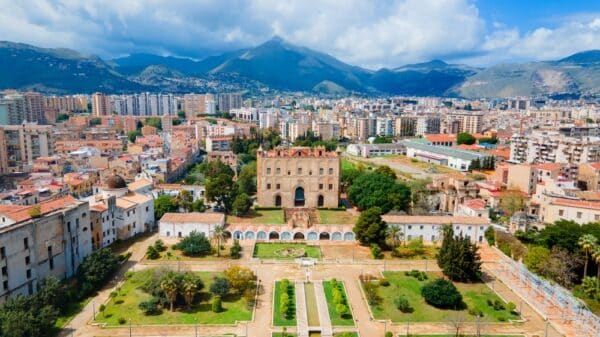






Standing among the villas of Mondello just north of Palermo, we felt the breeze coming off the Tyrrhenian Sea. It carried a fragrance, one so entrancing we had to stop and let our noses admire it. Sweet and floral, yet woodsy and warm, almost spicy. For a moment, the air itself was the scent—the two could not be separated. To breathe was to take it in.
Sicily is a deeply botanical place. Towering fig trees line the sidewalks, and vines of star jasmine cover the walls. But we soon learned that in spring, it’s the smell of zagara that takes over and lends everything a romantic, almost wistful quality. And what we could smell on that May evening was just a whiff compared to how it used to be.
Zagara are citrus blossoms, which appear most famously on orange trees, but also on lemon, mandarin, tangerine, kumquat, and so on. For centuries, citrus was central to the economy and identity of the island. The groves covered vast plains, and the scent was everywhere.
Today, many of those groves are gone. Zagara is now a wisp on the wind in places where it used to infuse the land with its essence. One of the island’s other famous exports—organized crime—is the main culprit, and economics and climate change may soon claim what’s left.
Citrus Takes Root
Many things grow in Sicily. Its Mediterranean location, varying altitudes, and volcanic soils make it a happy home for thousands of plants—some endemic, some introduced.
Over the generations, Sicilians and their conquerors altered the landscapes and grew fields of everything from sugarcane to olives. The Arabs, arriving around the year 850, brought bitter oranges with them. Sweet oranges, lemons, and other fruits followed.
Citrus trees produce fruit, but the flowers come first. Zagara is a small, radiant white flower with yellow pistils in the center. After pollination, the petals fall, and the fruit grows from the ovary, swelling into the shining orbs we eat. An orange tree in bloom is a beautiful sight—distinctively, as the oranges grow, other flowers remain on the leaves. It looks as though the oranges are tucking the blossoms behind their ears.
The flowers, whose name came from the Arabic “zahr,” became central to Sicilian culture. Their appearance heralded spring, but they meant more to the people of the island than just the harvest.
“Zagara possesses an extraordinary sensory and evocative power,” says Rosario Schicchi, the director of the Palermo Botanical Garden. “Its intense fragrance travels far beyond the boundaries of gardens and citrus groves, reaching even those with no direct connection to cultivation. It is traditionally regarded as the quintessential wedding flower—hence the expression ‘orange blossoms’—and symbolizes abundance, fertility, and a lasting union.”
[W]hen the zagara blossomed, Sicilians journeyed into their shared history.
By the 19th century, citrus was the dominant crop. The Conca d’Oro—the “Golden Basin” of fields outside of Palermo—was famous for its many orange and lemon trees. Citrus travels well, and Sicily’s great quantities of delicious fruit made it a major player in world trade. Even the flowers themselves were made into oils, perfumes, and ingredients. And if you didn’t know Sicily for its citrus, you found out the moment you arrived.
“As you approach Palermo, a strange and delicious perfume comes to meet you from the shore. It is the scent of the orange and lemon trees in bloom, a breath of fragrance that blankets the gulf,” wrote French author Guy de Maupassant in 1885.
It didn’t just enthrall visitors. For Sicilians, says Schicchi, zagara belongs “simultaneously to the agricultural landscape, the language, and the emotional imagination.” Every spring—or more often, as some citruses have multiple blooms—the island experienced a “profound sense of belonging.” Smell is closely tied to memory, and when the zagara blossomed, Sicilians journeyed into their shared history.

The Underside of the Groves
At times, if anything, Sicilians felt too close to the crop.
“Traditionally, Sicily is a poor country, and the people lived among their groves,” says Gianniantonio Domina, a professor of applied botany at the University of Palermo. “Often, the people who cultivated oranges were paid in oranges, so it was more a story of work exploitation than something romantic.”
And citrus wasn’t the only force taking root on the island. Cosa Nostra, better known as the Mafia, emerged in Sicily alongside citrus. Mafie were private gangs, hired to protect the groves. Over time, the gangs grew into a criminal network that touched every part of Sicilian life.
One of the mob’s greatest opportunities for exploitation and control emerged after World War II. Palermo was heavily bombed during the war, and an influx of Sicilians poured into the city in response to industrialization. There was an urgent need not just to rebuild, but to expand.
What was left of the groves around Palermo generally met three fates: abandonment, destruction, or mob control.
Starting in the 1950s, a sinister, decades-long construction boom and money-laundering scheme took over Palermo. Mafia-supported politicians issued fraudulent permits and overlooked urban planning rules. Mafia-allied contractors paved over the Conca d’Oro and other agricultural land, which was cheap and easy to develop and profit from. Landowners, aristocrats, and builders who didn’t work with Mafia-backed developers, use Mafia-aligned suppliers, or agree with Mafia members’ demands were made offers they couldn’t refuse. Those who did shared in the profits.
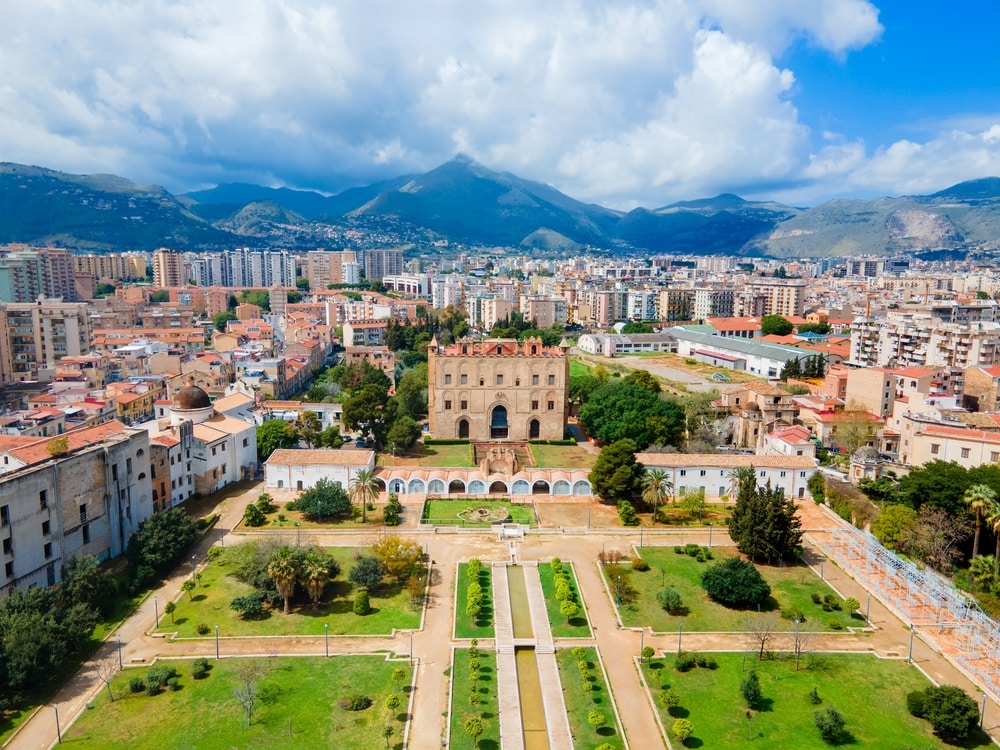
The “Sack of Palermo,” as it’s now called, turned large swaths of one of Europe’s most beautiful cities and its groves into shoddily made apartment buildings and cement slums. The developments lacked not just amenities but character, community, and access to the natural spaces that had connected the people to the land.
What was left of the groves around Palermo generally met three fates: abandonment, destruction, or mob control. Then, more opportunity arrived in the form of EU subsidies in the ‘80s and ‘90s: essentially, groves were paid not to produce. It was a dark take on the saying Il dolce far niente—“the sweetness of doing nothing.”
Tradition Against Reality
As the Golden Basin turned gray, citrus cultivation continued on other parts of the island. The cool nights and volcanic soils around Mt. Etna famously produce blood oranges, and you’ll find many orchards near Catania and Siracusa. But today’s trees are more susceptible to viruses, with cultivars selected for yield and uniformity rather than botanical diversity, and the industry as a whole is increasingly under threat.
Economically, countries like Egypt and Spain outcompete Sicily on labor costs for producing citrus. Domina says that the effort to harvest the fruit in Sicily today is grueling, essentially “heroic agriculture.” Instead, as the climate warms and droughts increase, local farmers find that mangoes and avocadoes are a better fit and get them a better return.
“It’s probably more important as tradition than in reality.”
Zagara is central to Sicilian identity, and intrinsic to how tourists imagine the island—a romantic life among the orchards. But is that worth the expense and the toll it takes on those who live there today?
“It’s probably more important as tradition than in reality,” says Domina. He describes the scenes that visitors want to see—groves with stone walls, connected by small roads—as mostly gone. “But what little remains should be protected.”
There are still parts of Palermo where you can smell zagara. Domina suggests the Parco dello Favorita, where the local government keeps some trees for “landscape interest.” The Palermo Botanical Garden has over 250 historic specimens, some dating back to the 1700s. Or there are the perfumes, soaps, and hand creams for sale at the airports—the scent shot through with chemicals and lacking the richness that comes from the trees.
Or, do what I did. Visit Mondello in the spring. Walk around the gated villas with their small, lush gardens. Let the salty air, trapped against the nearby limestone cliffs, gather up what blooming scents do remain. Let it wash over you, the way it has for travelers for centuries. Breathe in deep. Then let it go.