










Libya is a nation of unexpected wonders.
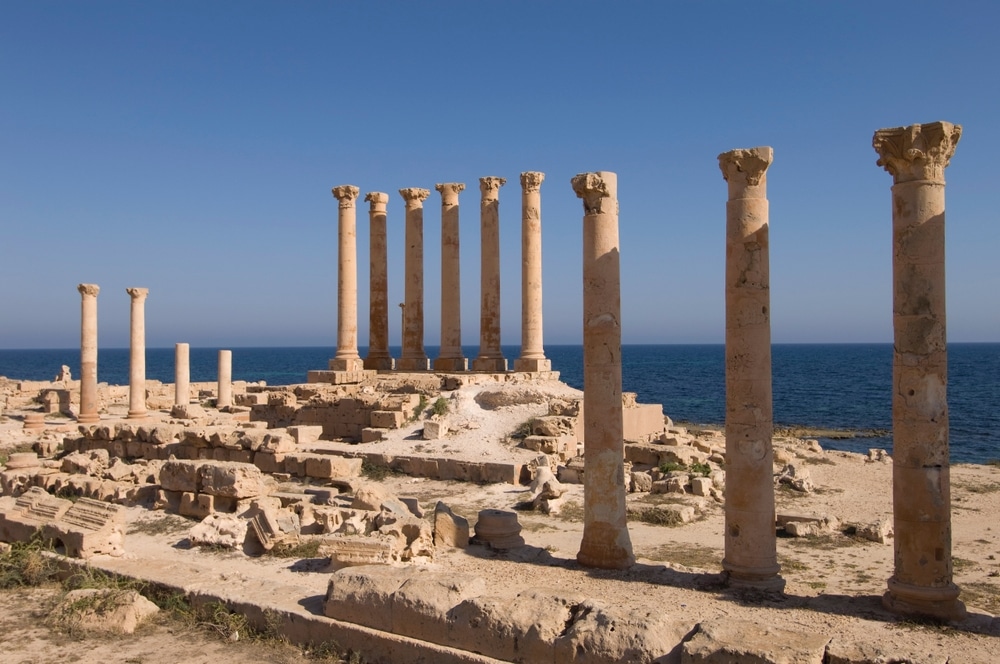
Home to the magnificent ruins of Leptis Magna and Sabratha, Libya boasts exceptional Roman relics along its coastline.
During the Italian colonization from 1911 to 1951, Libya’s architectural landscape was notably shaped, especially visible in the streets of Tripoli, where Italian influence lingers, even in the refined way Libyans enjoy their cappuccino.
Outside of a small, currently off-limits section of the eastern coast, Libya remains largely a vast desert sparsely populated, hiding ancient Berber caravan towns such as Ghadames, which is over 600 kilometers from Tripoli.
Yet, since 2011, Libya has faced significant challenges as a failed state, struggling to recover from a prolonged civil conflict that makes it the most unexplored country within the Mediterranean for tourists.
Nevertheless, with adequate preparation and research, it is entirely feasible to travel to Libya safely.
This guide offers extensive travel tips for Libya on how to navigate your adventure here.
 Libya today: what is it like to travel to Libya?
The events of 2011, following the Arab Spring in neighboring Tunisia and Egypt, saw peaceful protests against the dictatorial regime of Muammar Gaddafi spiral into a devastating armed conflict.
Gaddafi was ultimately defeated, marking the end of over four decades of tyrannical rule. Initially, there was hope for a new democratic dawn, but soon after, factions that opposed Gaddafi began fighting among themselves for power, further complicating Libya’s political landscape.
#The country experienced a second civil war, culminating in a divided Libya controlled by rival governments: West Libya, with Tripoli as its capital, and East Libya, with Benghazi at its core.
A ceasefire was reached in October 2020, leading to promises of elections that continue to be delayed. Today, although the ceasefire holds, sporadic clashes remind us that Libya remains politically fractured.
Travelers can currently venture into Libya, but visas are typically only valid within the West, as the Eastern Government does not recognize them. Nonetheless, East Libya has opened its borders for travelers holding regular visas, albeit with an entry fee of €510.
 Is it safe to travel to Libya?
Safety is understandably a major concern for potential visitors to Libya, given its tumultuous history. With the 2020 ceasefire in place, many locals assure that travel within Western Libya is predominantly safe, despite occasional clashes.
Personal travel experience in Libya
My travels through conflict zones like Afghanistan and Syria often felt precarious, yet Libya presented a different atmosphere. In areas deemed safe, military presence was minimal, and many sites remained intact, contrasting sharply with the visible destruction found in many other conflict-ridden countries.
 How to get a visa for Libya
Previously, obtaining a visa for Libya was notoriously complex. However, the recent introduction of an e-visa system in April 2024 has simplified the process significantly.
Applicants can expect to receive a valid visa within a week. You can find more information about the e-visa on the official government website.
e-Visa FAQs
What is the cost of the e-visa?
The fee for the e-visa is approximately 63 US dollars.
What is the processing time and duration of validity?
Approval usually takes about five working days, and once granted, you have 90 days to enter Libya.
Is the e-visa reliable?
While initial inconsistencies affected the e-visa’s reliability, recent data suggests a 100% approval rate since 2025.
Can you travel independently with the e-visa?
Independent travel is theoretically restricted in Libya, necessitating a local guide for the duration of your visit.
 Travel insurance for Libya
Due to the unique risks involved, most travel insurance companies do not cover travel in Libya, making IATI a reliable option.
 Traveling to Libya as an independent traveler: is it allowed?
Independent travel is not permitted in Libya. All travelers must be accompanied by a local guide and comply with the regulations set by Libyan authorities.
Your local guide’s role
Upon arrival at Tripoli International Airport, travelers must wait for their local guide or official sponsor prior to entering the country. This representative assists with formalities and provides guidance throughout the visit.
Set itineraries
Your travel itinerary will be presented to the security department before arrival, thus flexibility is limited.
Exploring Tripoli independently
Although guided tours are the standard, discussions with your local guide may allow for some individual exploration in Tripoli.
 Tours for Libya
As independent travel is not feasible, joining a guided tour is the best option, with trips organized by Against the Compass providing immersive experiences.
 Best time to visit Libya
Ideal visiting months: November to March
These months provide a more comfortable climate, though nighttime temperatures in December and January can drop near freezing, especially in desert regions.
Least favorable period: June to September
The summer months in Libya can be prohibitively hot, making exploration challenging.
 How to get to Libya
Air travel to Libya
The primary airport is Mitiga International Airport, located just outside of Tripoli. Current flight connections are limited, primarily from Tunis, Cairo, and Istanbul.
Border crossings
Travelers can approach Libya from neighboring nations, with direct bus services from Tunisia available, although border processes can be lengthy.
 Top experiences in Libya
Libya is rich in tourism potential. Here are some highlights:
1 – Exploring Roman ruins
Leptis Magna and Sabratha stand as testament to Libya’s ancient history and perfectly complement the vibrant Mediterranean backdrop.
2 – The Italian influence in Tripoli
The remnants of Italian heritage can be seen in Tripoli’s architecture and an enduring coffee culture.
3 – The Libyan desert
Combining vast, untouched landscapes with cultural exchanges, the desert offers a unique experience.
4 – Ghadames – a UNESCO site
The ancient town of Ghadames features a labyrinthine structure and is a stunning oasis.
5 – Insight into Misrata’s history
The city, heavily affected by the civil war, features museums that depict its recent past.
 Internet and connectivity in Libya
While general connectivity may be unreliable, obtaining a local SIM card is straightforward. A SIM with about 20GB of data can be acquired affordably.
Consider an eSIM
An eSIM provides data services without needing to purchase a physical card, simplifying connectivity.
 Budget and money: how much does it cost to travel to Libya?
The local currency, the Libyan Dinar (LYD), currently has a rough exchange rate of 1 USD = 4.85 LYD.
Cash transactions only
Credit and debit cards are generally unusable, so carrying cash is advisable. Your expenditures will primarily cover necessities like meals and accommodation.
Cost overview
- Visa: around 65 USD
- Round trip flight from Tunis to Tripoli: approximately €250
- Local meal: 25-40 LYD
- Upscale restaurants: 50-90 LYD
- Coffee at a local café: 2 LYD
- Coffee at a fancy establishment: 5 LYD
 How to get around Libya
Traveling from city to city typically occurs by vehicle with your local guide.
- Gas is remarkably inexpensive, making road travel cost-effective.
- However, be prepared for potential fuel shortages, so carry extra fuel when necessary.
- Road conditions can vary, with coastal roads more congested compared to the largely deserted interior roadways.
 Libya: the country, people, and culture
As a significant member of the Maghreb region, Libya is characterized by its diverse cultural landscape.
People: The Libyans
Libya features a predominantly homogenous Arab population, though Berber communities also contribute to its rich cultural tapestry.
Language
Arabic is the official language, with dialects varying across the country. English is not widely spoken, yet local guides bridge this gap.
Religion
Sunni Islam is the prevalent faith, reflecting the high levels of religious adherence within Libyan society.
 Libyan cuisine
While not the main draw of your visit, Libya’s culinary offerings include dishes like couscous, reflecting the broader Maghreb cuisine heritage.
Italian influence
Due to historical ties, pasta and coffee are staples in local dining, with multiple Italian restaurants found in Tripoli.
Alcohol restrictions
Alcohol consumption is prohibited in Libya, a policy implemented since Gaddafi’s regime.
 Where to stay in Libya
Accommodation options are limited but sufficient for tourists and business travelers.
Where to stay in Tripoli
Mid-range – Hotel Victoria offers favorable views and amenities.
5-star – The Sheraton provides luxurious accommodations.
Accommodations outside Tripoli
In Ghadames, traditional hotels provide authentic experiences, while Misrata sees frequent activity from tours.
 Solo female travel in Libya
Solo female travelers will always have a local guide, enhancing their experience while ensuring adherence to local regulations.