













The first vibrant hue that greeted me in Älmhult was a striking yellow clock, proudly displayed in an expansive plaza outside the museum. This oversized timepiece, a larger version of Thomas Eriksson’s PS wall clock, is among those iconic IKEA designs familiar to many. The museum itself—a modest structure you might overlook—is actually housed in the original IKEA store, established in 1958 before its transformation into a museum in 2016.
On that gray winter morning, I took a 90-minute train ride from Malmö, passing through the picturesque southern Swedish countryside. As I approached Älmhult, delicate snowflakes began to drift down. With a population of around 18,000, the town sees roughly 5,000 commuters heading to IKEA each day. Despite its small town charm, Älmhult is home to over 50 nationalities. Upon disembarking, you can either venture towards the quaint town center or cross a bridge to the IKEA area, which features offices, a hotel, the museum, and two restaurants, all situated within a stone’s throw from the platform. Unlike the signature blue-and-yellow of most IKEA stores, this locale embraces a serene white palette with buildings no taller than three stories.
I settled into the IKEA Hotel, located just across the parking lot from the museum, a space virtually designed with IKEA furnishings. Each floor boasts a communal kitchen, complete with cookware and a cozy seating area. Interestingly, coffee was provided in the shared space, rather than in the rooms, reflecting a Swedish preference for community gathering. Upon entering my room, I noticed a sign by the bed that read, “Difficulties sleeping? Listen to the IKEA story here” accompanied by a QR code. Instead of scanning it, I headed straight to the museum to delve deeper into IKEA’s legacy.
My first stop was the museum restaurant, where the famed Swedish meatballs take center stage—a dish synonymous with IKEA, selling over a billion yearly. However, this restaurant offers its own unique twist: versions of meatballs shaped by global influences, such as Indian-inspired and Greek-inspired varieties, or served atop pasta with lemongrass aioli. Unlike IKEA’s internationally recognized Swedish version, the local adaptations reflect a culinary diversity.
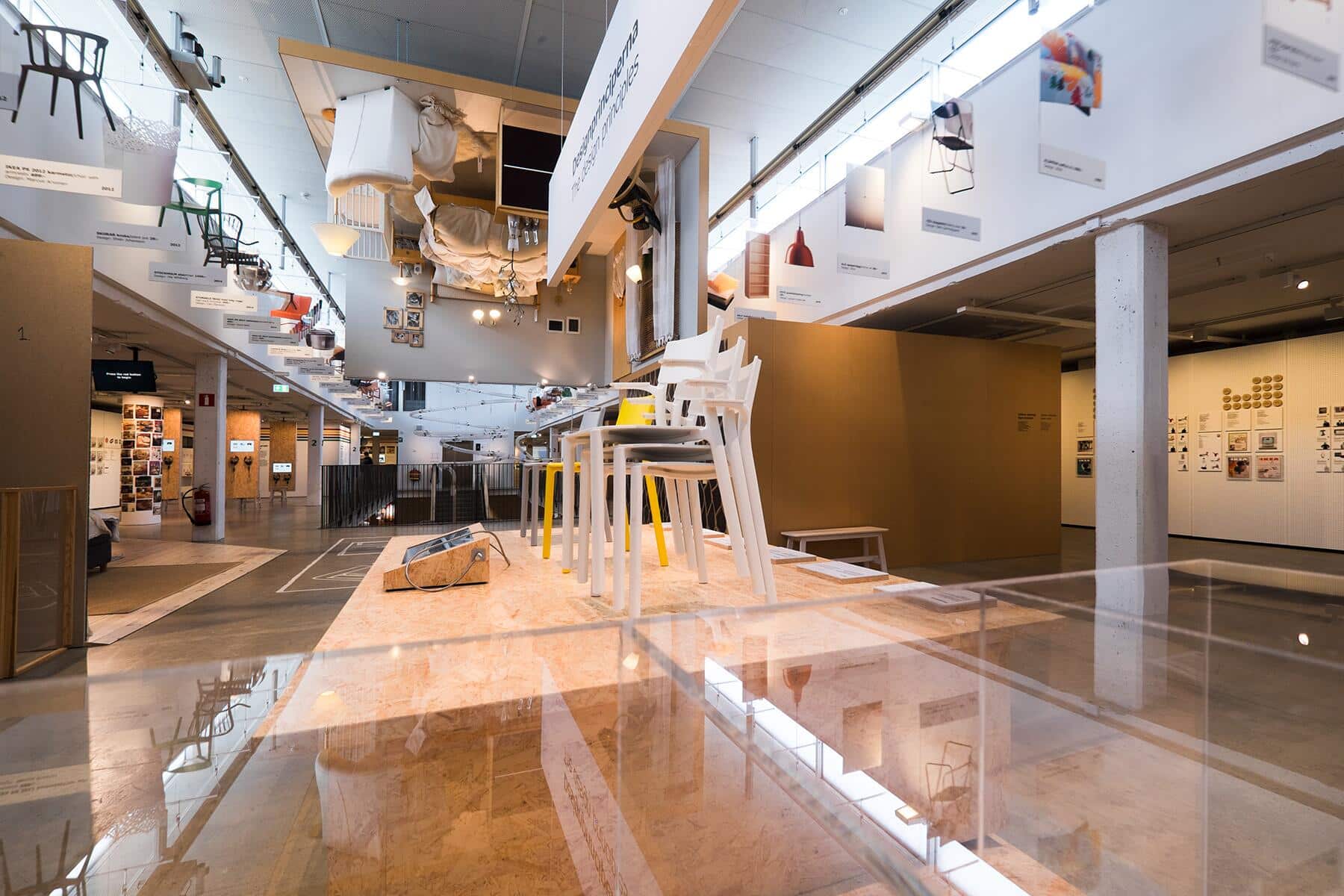
As I explored the museum, which occupies several levels of the original store, I came across a replica of Ingvar Kamprad’s shed—the very place where he began his journey at just 17. Inside, the shed barely offers enough space to turn around, symbolizing the humble beginnings that shaped not only IKEA but also speaks to Sweden’s national narrative. Nearby, a wall showcases similar “humble origins” of tech giants like Google and Apple, a curious blend of American inspiration within a primarily Scandinavian context.
Wandering through decades of designs, the museum showcases period-specific room settings encapsulated behind glass. These arrangements surprise with their bold colors and imaginative styles, contrasting sharply with the broader narrative of Swedish design as being rooted in minimalism. The very essence of Sweden visible through these exhibits celebrates vibrancy, diverging from the subdued reality outside the museum walls.
Though the exhibits feature placards marked by traditional Swedish modesty, such as recognizing the playful addition of what may have been the “world’s first ball pit” in their stores, they also leave out some significant fragments of history. For instance, they showcase Kamprad’s lavish home office in Switzerland without addressing that he resided there for nearly four decades while establishing IKEA’s corporate framework outside Sweden—a decision entwined with the country’s heavy taxation and social welfare ethos.

As I descended to the lower levels, the focus shifted from history to philosophy, where IKEA elaborates on its principle of “democratic design”—the idea that quality home design should be accessible, regardless of one’s income. A captivating story about how King Gustav III, inspired by a chair seen at Versailles, ordered a simplified version that was more affordable and mass-produced. This exemplifies the ideals IKEA hopes to convey, particularly evident from a group of teenagers engaging with the exhibits and taking notes.
On the ground floor, the museum shop stands in stark contrast to the labyrinth of a typical IKEA showroom. Here, you’ll find distinctive items unique to this location, including traditional Swedish souvenirs like Dala horses and beautifully crafted fika trays. As I glanced at a tiny Allen key keychain, two women nearby debated over design choices, illustrating the charm of local craftsmanship.
The following morning, I boarded the train back to Malmö, light snow swirling around me as I crossed the plaza once more. I had lived just ninety minutes away for several years and never ventured into Älmhult. Initially, I viewed it simply as a company town home to its namesake museum, yet I discovered that it also serves as an insightful reflection of the Swedish identity I have come to appreciate during my time here.

THINGS TO KNOW
WHERE TO STAY
In conclusion, a visit to Älmhult extends far beyond a simple exploration of IKEA; it reveals a deeper narrative surrounding Swedish innovation, culture, and design philosophy that resonates with locals and visitors alike.