







 Traveling to Syria: An Overview
Since the conflict began in March 2011, Syria has undergone significant transformations impacting tourism.
Traveling in Syria: 2011 – 2018
From 2011 to early 2018, Syria was often deemed a war zone, essentially closed off to foreign tourists.
Traveling in Syria: 2019 – 2026
By late 2018, certain regions of west Syria witnessed a semblance of stability as the government began inviting tourists back. Initially, international visitors were scarce, with officials expressing skepticism. However, tourism gradually rebounded, hitting a peak in 2023. Nonetheless, independent travel remained limited.
As of October 2023, conflicts spilling over from Gaza and Lebanon notably curtailed tourism.
Traveling in Syria under the New Government (2026 Onward)
Following the overthrow of Bashar al-Assad’s regime by Hayat Tahrir al-Sham (HTS) in December 2024, the country is entering an uncharted chapter. While HTS portrays itself as more moderate, concerns linger about their ability to maintain Syria’s prior secular landscape.
 Key Changes Under the New Government
The travel dynamics in Syria have shifted considerably since 2024.
- New security personnel bear distinct appearances, often displaying signs of their past affiliations.
- The country’s flag has undergone a transformation, now recognized internationally.
- Portraits of Bashar al-Assad have largely been removed.
- Local sentiments about past leadership have surfaced freely among the populace.
- Independent travel has become viable again.
- Previously restricted areas, including Idlib, are now accessible.
- Preliminary indications of Sharia laws are emerging, prompting closures of some establishments.
 Tourist Visa Information for Syria
Prior to December 2024: Visitors required security clearance arranged through an authorized tour operator.
As of January 2025: Tourist visas are now available upon arrival, eliminating the need for prior arrangements.
Entry Points for Visa on Arrival
The visa can be collected upon entering Syria from Lebanon, Jordan, or at Damascus International Airport (DAM).
Visa Validity
The newly-instated visa permits travel throughout Syria for a duration of 30 days.
Eligibility for Visa on Arrival
Visitors from all nationalities, including U.S. citizens, can obtain a visa on arrival.
Visa Costs
As of June 2025, the visa costs vary by nationality:
- EU: $75
- Canada: $100
- UK, AU, NZ: $150
- USA: $200
- Colombia/Mexico/Venezuela: $50
- Argentina: $150
- Jordan/Lebanon/Malaysia/Mauritania: Free
- Others: $25 to $50, dependent on country
 Travel Insurance for Syria
Most insurance providers do not cater to travelers in Syria, with IATI Insurance being a notable exception.
Features of IATI include:
- Exclusive coverage for Syria
- Flexible plans for various budgets
- Coverage for seniors
- Special 5% discount for blog readers
 Transportation Options for Getting to Syria
Traveling by Land
1 – From Beirut (Lebanon) to Damascus
Travel from Beirut to Damascus is straightforward, with the distance of about 115km taking around 3-4 hours, inclusive of customs.
2 – From Tripoli to Tartus
Alternatively, you may journey from Tripoli to Tartus with shared taxis, costing roughly 15 USD for a journey of about 65km, with taxis running frequently until 8 PM.
3 – From Amman (Jordan) to Syria
Traveling from Amman involves a longer journey, with potential delays at border crossings. Buses operate daily.
4 – From Turkey to Syria
Currently, the border with Turkey remains closed to foreign travelers.
Traveling by Air
Post-government change, several airlines have resumed flight services to Damascus International Airport, offering another option for entry into the country.
 Is Traveling in Syria Safe?
Concerns about safety parallel questions regarding visa policies. However, cities like Aleppo and Damascus have returned to normalcy.
Throughout my various journeys to Syria, including my Christmas visit in 2018, I noted a bustling atmosphere, reflective of a country emerging from turmoil.
Safety Post-Assad Regime
The current safety landscape remains ambiguous, with varying experiences reported by locals, especially minorities facing persecution. On the surface, many tourist-friendly areas appear lively and welcoming.
 Safe Regions to Explore in Syria
Familiarize yourself with our safe travel itinerary for Syria. Recommended places include:
- Damascus
- Maaloula
- Bosra
- Homs
- Aleppo
- Krak de Chevaliers
- Palmyra
Areas to Approach with Caution
Exercise discretion when considering travel to the Syrian coast, particularly Latakia, due to its historical ties to Assad’s regime.
Recently Accessible Areas
Idlib
Idlib has recently become open to visitors. Continuous monitoring is recommended given its conservative nature.
Raqqa and Surrounding Regions
Raqqa is now accessible from western Syria, though it requires special permits.
 Understanding the Local People
Language and Communication
The official language is Levantine Arabic. While many English speakers have departed, it is advisable to learn basic Arabic phrases.
Religious Diversity
65% of the population practices Sunni Islam, accompanied by a robust Christian community among others.
 Responsible Tourism Practices
When traveling in Syria, sensitivity to local sentiments is crucial.
Engage Respectfully
Use culturally respectful language and gestures while interacting with locals.
Mind Your Photography
Avoid taking photos of military personnel or damaged infrastructures without consent.
Support Local Businesses
Engage with local shops and businesses to stimulate the economy.
 Navigating Within Syria
Getting around Syria via local buses and shared taxis is efficient and common.
 Internet Access in Syria
Wi-Fi Availability
Most hotels provide decent Wi-Fi connectivity.
Obtaining a SIM Card
SIM cards are available from authorized retailers, although eSIMs are not supported currently.
Using a VPN
To ensure secure browsing and circumvent censorship, using a reliable VPN is strongly advised.
 Financial Considerations in Syria
The currency in Syria is the Syrian Pound (SYP), which has experienced substantial fluctuations.
Exchanging Currency
Both Euros and USD can be exchanged, with USD often receiving a better rate.
Cash Transactions
Due to restrictions, credit card payments and ATM usage are limited. Carrying cash is essential.
Cost of Living
Typical prices for common expenses include:
- Lunch in a local restaurant: 50,000 to 80,000 SYP
- Food at a nice restaurant: 150,000 to 250,000 SYP
- Breakfast: 35,000 SYP
- Museum entry: 25,000 SYP
- Public transport: 50,000 to 70,000 SYP
- Accommodation: $35 to $90 for a private room
The Current State of Syria’s Cities
Damascus
Most of the city remains intact, aside from the outskirts.
Aleppo
While parts of the Old City have been damaged, the city is in the process of rejuvenation.
Homs
The city sustained considerable damage, with approximately 40% destroyed.
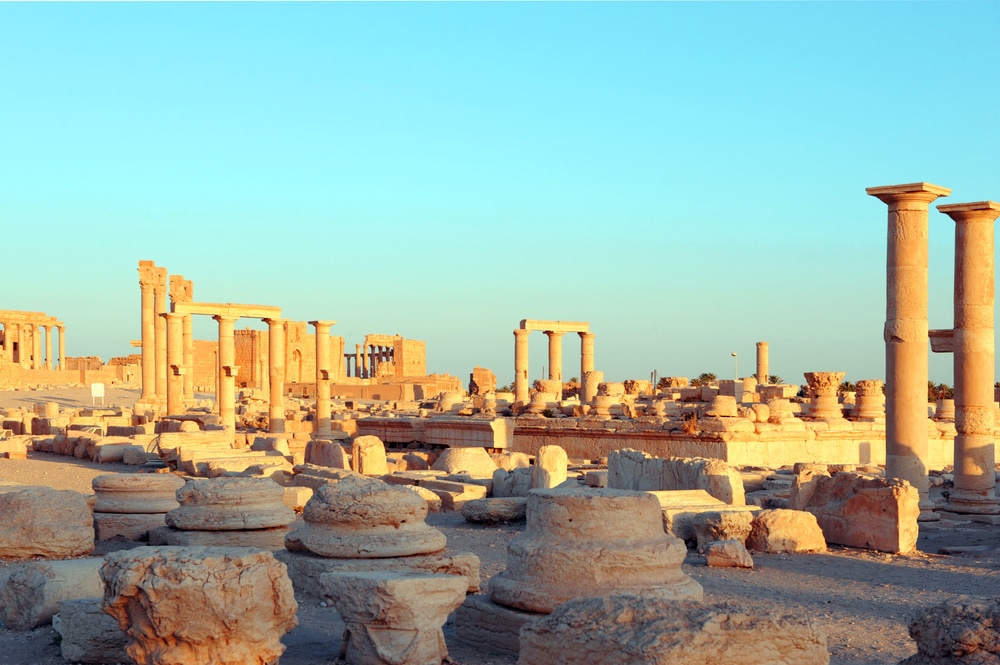
Palmyra
Despite some destruction, many archaeological wonders remain accessible to visitors.
 Photography Guidelines in Syria
You’re welcome to take pictures, with one notable exception: military sites and personnel.
 Accommodation Choices in Syria
Syria boasts a range of hotel options to suit all budgets.
Where to Stay in Damascus
Budget Option: Green Hotel – Simple, clean, and situated conveniently near the Old City, at around $15 per night.
Mid-range Option: Beit al Mamlouka – A charming boutique hotel in the historic district.
Where to Stay in Aleppo
Budget Option: Aleppo Palace – Located near main attractions with stunning views.
Culinary Experiences in Syria
Syria’s cuisine reflects its Mediterranean heritage, rich in flavors and diversity. From classic hummus to kebabs and regional specialties, the culinary offerings are abundant. Breakfast, featuring varieties of hummus and fuul, is particularly delectable.
Alcohol is readily accessible, especially in places frequented by the Christian community in Damascus.
In conclusion, Syria is a land rich with history, culture, and resilience. While the journey to this captivating destination warrants thoughtful planning, the experiences awaiting travelers offer insights into the indomitable spirit of its people and the beauty of its landscapes. As the country continues to recover and rebuild, now may be the right time to explore its wonders, provided you remain mindful of its complexities and nuances.