














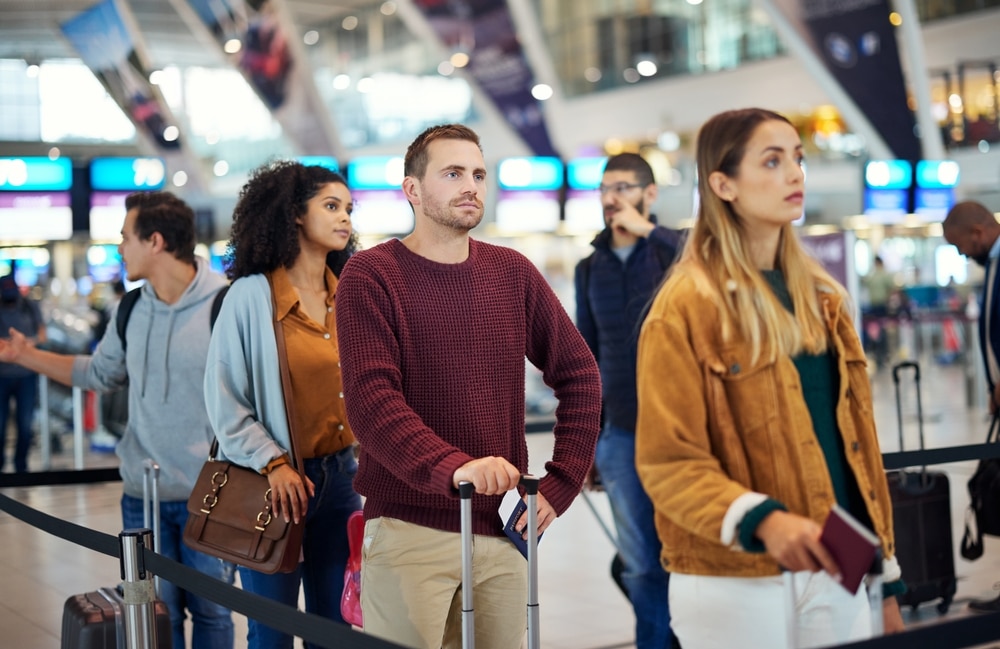
Historically, international travelers arriving in the United States navigated a distinct two-stage entry process. The first encounter was with an Immigration agent, who meticulously verified travel documents and confirmed eligibility for entry. After being cleared, travelers proceeded to a second checkpoint where a Customs agent questioned them regarding the items they were bringing into the country.
While the first step remains a staple of the arrival experience, many frequent flyers have noticed that the separate, secondary customs stop has largely vanished. This shift reflects a major transformation in how the U.S. manages its borders and handles the millions of passengers arriving annually.
Understanding the Three Pillars of U.S. Border Security Inspections
The United States shares vast, often open borders with its neighbors and possesses extensive coastlines. However, crossing into the country outside of official channels is a legal violation. To maintain security, all travelers must pass through one of the 328 designated Ports of Entry (POE), which include major international airports, seaports, and land-based border crossings.
At these entry points, federal authorities focus on three specific types of screening. First, they verify the identity and legal status of travelers, ensuring that U.S. citizens are processed and foreign nationals meet all visa and entry requirements. Second, they inspect commodities, whether they arrive as commercial cargo or as personal belongings in a traveler’s suitcase. Third, they perform agricultural inspections to prevent the introduction of invasive species or diseases that could threaten domestic food supplies.
In the past, these responsibilities were divided among three separate government entities. The Immigration and Naturalization Service (INS) handled people, the U.S. Customs Service managed goods, and the U.S. Department of Agriculture (USDA) oversaw biological and food-related risks.
The Evolution of Federal Inspections Under the Department of Homeland Security
The landscape of border security changed fundamentally in 2003. In the wake of the 9/11 attacks, the Department of Homeland Security (DHS) was established to consolidate various security functions. This led to the creation of U.S. Customs and Border Protection (CBP), a massive law enforcement agency that now employs over 60,000 people, including tens of thousands of officers stationed at Ports of Entry.
Today, CBP’s Office of Field Operations has integrated these formerly separate functions into a single, unified process. Instead of moving from one agency’s desk to another, travelers now interact with officers trained to handle immigration, customs, and agricultural concerns simultaneously. This streamlined approach is heavily supported by modern technological advancements, such as biometric facial recognition and automated data systems, which enhance both security and the speed of processing. While the layout and specific programs—like Global Entry or Preclearance—may vary by airport, the goal is a seamless experience for the traveler.
The shift from manual, paper-based declarations and lengthy interviews to digital systems has made the work of border officials less conspicuous. While the physical “second stop” for customs may no longer be the default for every passenger, the screening is still occurring. Officers now use data and targeted observations to determine when a secondary, more intensive inspection is necessary. For example, if a traveler declares high-value items, their passport might be temporarily flagged for a secondary desk in the baggage claim area to settle duty payments. In other cases, officers may patrol baggage carousels to ask targeted questions about specific food items or agricultural products based on the flight’s origin.
Modern Customs and Border Protection Surveillance Techniques
While CBP does not disclose its full range of investigative tactics, the screening process is a blend of high-tech data analysis and traditional law enforcement observation. Officers are trained to identify inconsistencies in travel stories or baggage contents that suggest illegal activity, such as commercial smuggling or visa fraud.
In some instances, inspections are triggered by suspicious quantities of goods. An individual carrying multiple copies of the same retail items might be flagged for commercial smuggling rather than personal use. In other scenarios, the contents of a traveler’s luggage can provide clues about their true intentions for visiting the country. If someone entering on a tourist visa is carrying professional certifications and household goods that suggest they intend to stay and work, they may be denied entry after a more thorough secondary interview.
The transition to a digital-first environment has largely eliminated the need for paper customs forms. For many U.S. citizens, the arrival process now consists of a quick facial recognition scan before they are cleared to collect their bags and exit. This “low-touch” model does not mean screening has been reduced; rather, it has become more sophisticated and happens behind the scenes, allowing the majority of law-abiding travelers to clear the border faster than ever before.
Summary of the Modern Border Experience
The disappearance of the traditional two-step border process is a direct result of the integration of federal agencies and the adoption of advanced technology. By combining immigration, customs, and agricultural screening into a single unified flow, U.S. Customs and Border Protection has replaced redundant checkpoints with a data-driven system. For the modern traveler, this means that while the “second stop” is no longer a standard part of the journey, the oversight remains as rigorous as ever, just more efficient and less visible.