















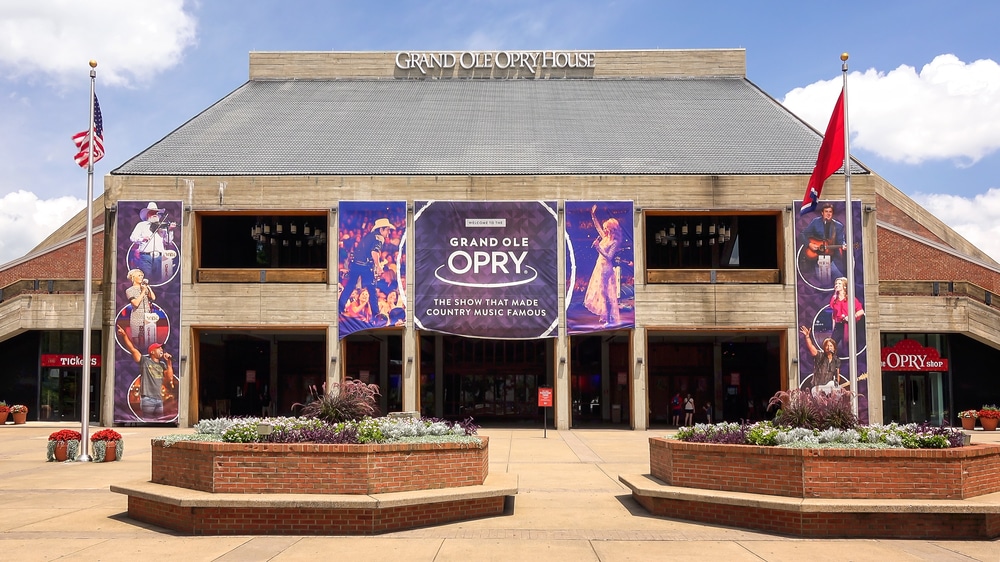
Standing behind the heavy crimson curtains of Nashville’s Grand Ole Opry during a backstage tour, it isn’t a person that leaves me breathless, but a simple six-foot circle of wood. This legendary inlay, removed from the stage of the Opry’s previous home at the Ryman Auditorium in 1974, is perhaps the most iconic piece of real estate in Tennessee. It serves as the physical bridge between country music’s storied past and its vibrant future, marking the exact spot where every legend has stood.
This stage has witnessed the highest highs and most infamous lows of music history. It is where Johnny Cash, in a moment of alcohol-fueled rebellion, smashed the footlights and earned a temporary ban. It’s where Roy Acuff famously attempted to teach President Nixon how to use a yo-yo just months before the Watergate scandal peaked. The circle saw a 13-year-old Dolly Parton make her 1959 debut and watched as Elvis Presley struggled through his only Opry appearance. Walking across these boards, one can almost feel the weight of the countless dreams that have been realized within this space.
Celebrating a Century of the Grand Ole Opry
The energy within these walls has been building since 1925. As the world’s longest-running radio broadcast, the Opry has occupied several venues, but it remains the undisputed heartbeat of Nashville. The institution is currently embarking on its “Opry 100” celebration, a year-long centennial event running through October 2026. These special shows are designed to honor the past century with historic retrospectives, elite lineups, and the kind of unannounced guest appearances that have made the show a household name.
The backstage atmosphere is surprisingly intimate. You might find yourself passing modern stars like Dustin Lynch or Liam St. John in the corridors, but the real attraction is the history displayed on the walls. While the Opry is rooted in country, its influence is surprisingly broad. Photographs of performers like Jack Black, Kevin Bacon, Paul McCartney, and even Sabrina Carpenter line the halls. Seeing a pop icon like Carpenter among country royalty highlights the Opry’s evolving nature; it remains a stage where artists from all genres come to pay their respects to a musical tradition.
Secrets of the Opry Family
While it is well-known that Opry members consider themselves a “family,” the backstage area offers a rare glimpse into how that bond is maintained. In the Family Room lounge, artists and their inner circles gather over lemonade in a space that feels like a time capsule of 1970s Nashville comfort. Though the facilities have been modernized—notably after the devastating floods of 2010—the soul of the room remains intact.
The 18 dressing rooms are each meticulously themed. There is the “Into the Circle” room designated for artists making their Opry debut, a “Stars and Stripes” room honoring military service members, and a “Women of Country” suite dedicated to icons like Patsy Cline. One of the most charming spaces is the “Cousin Minnie Room,” which displays Minnie Pearl’s signature hat, complete with the dangling price tag. Nearby, a particularly glamorous suite serves as a favorite for Dolly Parton whenever she visits.
One of the most unique features of the backstage area is the fully functional Grand Ole Opry Post Office. Every member has their own dedicated mailbox where fans can send mail directly to the venue. In a digital age, this tradition persists, with Dolly Parton’s mailbox (number 163) frequently overflowing with letters from around the world.
The Universal Appeal of the Live Experience
While the history is fascinating, the true magic of the Opry is found in the live performance. The show often provides unexpected highlights that transcend expectations. For instance, watching a performer like Dom Flemons take the stage—donning suspenders and a pork pie hat—reminds the audience of the deep, folk-heavy roots of the genre. His virtuosic display on the harmonica and traditional Carolina-style banjo picking can captivate a modern crowd, proving that the Opry is a place for musical discovery as much as it is for the hits.
Even for those who do not consider themselves traditional country music fans, the Opry’s pull is undeniable. The atmosphere is one of communal celebration, where announcer Charlie Mattos might shout out birthdays for fans ranging from their 20s to their 80s, or congratulate international visitors who traveled from the UK specifically to marry in Nashville. The show’s scale is staggering: it has been broadcast for more than 5,000 consecutive Saturday nights to a total audience exceeding 55 million. The technical infrastructure alone requires over 15 million feet of cabling to bring the show to life.
Final Thoughts on Nashville’s Defining Experience
Visiting the Grand Ole Opry provides a necessary foundation for understanding Nashville. Before exploring the neon lights of Broadway, seeing a show here offers a crash course in 100 years of cultural history. Whether you are a lifelong country enthusiast or a casual traveler, the Opry stands as the essential Nashville experience. It is the root of the city’s musical identity and, a century later, it remains the most prestigious stage an artist can hope to grace. As Garth Brooks once noted, being a member of this institution is the absolute pinnacle of a musical career.