















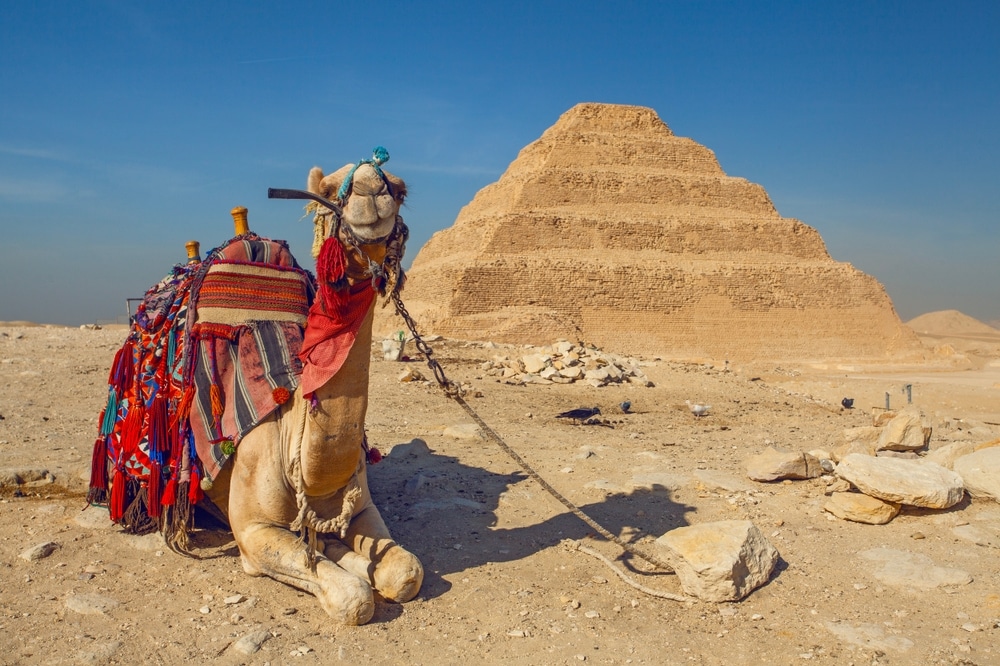
Just a short drive of about 20 miles south of Cairo leads you to the renowned necropolis of Saqqara, an expansive stretch of desert that unveils one of Egypt’s most remarkable archaeological treasures. Saqqara is dotted with historic pyramids, temples, and tombs, each narrating the intriguing evolution of ancient Egyptian civilization. Among these monumental structures, the Step Pyramid of Djoser stands out, recognized globally as the earliest large-scale stone pyramid.
Yet, beyond the colossal pyramids, there lies a more intimate narrative hidden within the confines of a single tomb, which belongs to two remarkable men.
The Lives of Khnumhotep and Niankhkhnum
Dating back to around 2400 BC, during the Fourth Dynasty of Ancient Egypt, Khnumhotep and Niankhkhnum served in the royal court, holding the prestigious title of “Overseer of the Manicurists of the Palace.” This role symbolized their close ties to the pharaoh and positioned them amongst a select group trusted to serve the king, indicative of a significant societal status.
The tomb shared by these two individuals was unveiled in 1964 by the renowned Egyptian archaeologist Ahmed Moussa. Recognized today as one of Saqqara’s more elaborately adorned non-royal tombs, its walls tell stories of daily life through rich depictions—feasts, offerings, agricultural pursuits, and familial interactions—crafted to accompany the deceased in their journey into the afterlife.
Visual Language and Significance of Tomb Art
Tomb artwork in ancient Egypt was steeped in meaning, structured by a visual language that dictated scale, placement, and gesture. Personnel within these artworks were portrayed according to their social hierarchy, with the tomb owner typically rendered larger to signify status. Such meticulous arrangements convey not just identity but also familial relationships, underscoring the connection between the figures depicted.
What makes the shared tomb of Khnumhotep and Niankhkhnum particularly striking is their frequent depiction together, which might suggest a profound relationship beyond mere friendship or kinship. As the visitor traverses through the tomb, they encounter scenes that display the two men in close proximity—standing proudly side by side, their bodies aligned in gestures that echo intimacy. In one poignant relief, they are depicted facing each other closely; in another, they embrace. This type of imagery often symbolizes a deep bond, reminiscent of spousal depictions, igniting discussion among historians and archaeologists alike.
Debates Over Their Relationship
Academic interpretations of Khnumhotep and Niankhkhnum’s relationship vary. Some scholars propose they may represent one of the earliest examples of a same-sex couple in recorded history, while others suggest they could be brothers, twins, or merely partners within the social fabric of their time. The lack of a concrete conclusion underscores the rich tapestry of human experience that ancient societies navigated—this relationship may reflect cultural dynamics that traditional interpretations don’t fully encapsulate.
The tomb’s design raises additional questions—shared burials were customary in ancient Egypt, but primarily among family units or couples. The unusual nature of two prominent male figures sharing a tomb hints at a bond deemed significant in their culture.
Artistic Details and Cultural Context
Further enriching this narrative are the elaborations present in the tomb’s artwork. Both Khnumhotep and Niankhkhnum are portrayed with their families, adhering to elite Old Kingdom conventions. Intriguingly, Niankhkhnum’s wife appears less frequently, which prompts scholars to consider the alternate narrative of their closeness, even in the context of family connections. These nuances certainly enrich the story conveyed by the tomb, highlighting the focal relationship between the two men.
Within this sacred space, visitors are invited to engage contemplatively with the detailed carvings—servants laboring, musicians performing, family members gathered—all unfolding against the backdrop of Khnumhotep and Niankhkhnum’s central importance.
Visiting Saqqara and the Enchantment of the Tomb
The vastness of Saqqara can be overwhelming, particularly under the intensity of the midday sun. However, stepping into the tomb provides a contrasting experience—one characterized by enclosure and tranquility. The transition from monumental grandeur to intimate spaces invites reflection on connections among individuals rather than mere societal status. In this stillness, the tomb shifts from a symbol of power to a testament of enduring bonds.
Over the years, interpretations of Khnumhotep and Niankhkhnum’s tomb have evolved, reflecting changing societal attitudes toward relationships and personal connections. Egyptologists cautiously navigate these discussions, recognizing that modern categorizations do not always align perfectly with ancient frameworks of identity and kinship. This ambiguity enriches the experience for travelers, encouraging personal reflections and interpretations shaped by the intricate art laid before them.
For those journeying to Saqqara, this tomb offers a unique lens through which to engage with the past. Instead of focusing purely on monumental architecture or divine worship, the narrative veers toward the personal, spotlighting the bonds that define humanity.
Although Khnumhotep and Niankhkhnum may not have been pharaohs, the significance of their shared tomb speaks volumes about their importance in their society and the esteem in which their relationship was held. Visited typically as part of a half-day excursion from central Cairo, Saqqara can be paired delightfully with nearby sites such as Dahshur or Memphis. To fully appreciate the nuances of this historic landscape, hiring a knowledgeable guide is advantageous, particularly for unearthing the treasures of lesser-known tombs.
Venturing to Saqqara offers travelers not just a glimpse into the grandeur of ancient Egypt but an opportunity to reflect on the lives and connections of those who walked its lands, echoing across millennia. In the end, the lasting legacy of Khnumhotep and Niankhkhnum serves as a reminder that for all its grandeur, history is ultimately about human connection and the stories we leave behind.