














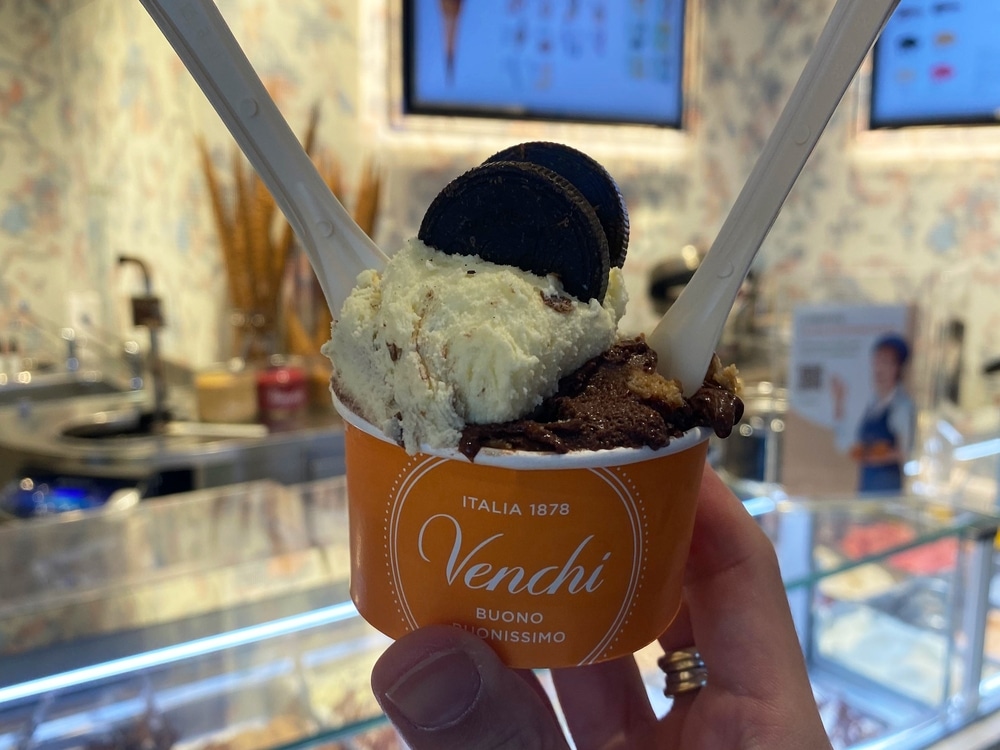
A social media post from a traveler in Italy recently gained significant traction online, serving as a cautionary tale for those visiting major European landmarks. Nicole Ann, a tourist from Florida, shared her frustration after being charged €44 (approximately $50) for two ice cream servings at a local gelateria in Rome. Her warning regarding the establishment, Don Nino, sparked a massive discussion with over 1,000 comments, highlighting the ongoing tension between tourism and transparent business practices.
The incident occurred in early June when Ann and her companion stopped for a quick snack. According to her account, they requested two small servings but were instead served “maxi” portions adorned with various unrequested toppings, including macarons, cannoli, and whipped cream. Ann noted that the staff added these extras without clarifying they were premium additions, leading her to believe they might be included. Furthermore, she stated that prices were not clearly displayed, and the verbal total was misheard as €14 until the final receipt revealed the actual €44 cost.
Deceptive Sales Tactics and the Tourist Experience
The traveler expressed disappointment not just with the price, but with the quality of the product, describing it as the least enjoyable gelato she experienced during her ten-day trip. This sentiment is echoed by many online reviewers; several locations of the same brand currently hold a 1.4-star rating on Google Maps. Common complaints from other patrons include misleading sales tactics where staff push larger sizes and extra toppings without disclosing the price impact.
Other travelers shared similar stories of being overcharged near iconic sites like the Trevi Fountain. One individual recounted paying €33 for two ice creams despite asking for the price beforehand. This pattern of behavior has led some visitors to suggest that travelers may find more comfort in global chains where pricing is standardized, though locals argue that authentic experiences are still available for those who know where to look.
Expert Tips for Avoiding Tourist Traps in Italy
Local residents and seasoned travelers suggest several ways to identify and avoid predatory pricing in popular Italian cities. A primary rule of thumb is that authentic, high-quality gelato in Italy typically costs between €3 and €5 for a standard serving. If an establishment does not have a clear, visible price list for its various sizes and toppings, it is often best to move on to another shop.
Another reliable indicator of a “tourist trap” is the clientele. If there are no locals in line and the shop is positioned directly in front of a major monument, prices are likely inflated. Experts recommend checking digital reviews before stepping inside. In the case of the viral Rome incident, the shop’s poor rating was a significant red flag that could have signaled trouble in advance. Some locals even advise that if a customer realizes they are being scammed before paying, they should feel empowered to leave the product on the counter and walk away.
Broader Context of Pricing Disparity in Europe
The issue of “tourist pricing” is not exclusive to Rome. Similar reports have emerged from other major European hubs. For instance, investigations in Paris have previously highlighted establishments that charge foreigners higher rates than locals or pressure tourists into leaving tips, which is not a standard practice in French culture. While Ann noted that Rome was the only city during her Italian journey where she felt targeted by such schemes, it remains a common challenge in high-traffic destination zones across the continent.
Despite the backlash she received from some commenters who blamed her for not being more vigilant, Ann maintained that while she made a mistake by not double-checking the cost, the practice itself remains a form of exploitation. She clarified that she was an experienced traveler who was simply exhausted and looking for a quick refreshment, highlighting how even seasoned visitors can fall prey to these tactics when their guard is down.
Final Thoughts on Navigating Rome’s Food Scene
Navigating the culinary landscape of a popular city like Rome requires a balance of spontaneity and caution. To ensure a positive experience, always look for posted prices, prioritize shops frequented by locals, and take a quick moment to check online ratings. While tourist traps exist, they do not represent the entirety of Italy’s vibrant food culture, and being a “savvy traveler” often comes down to knowing when to ask for a price before the first scoop is served.