















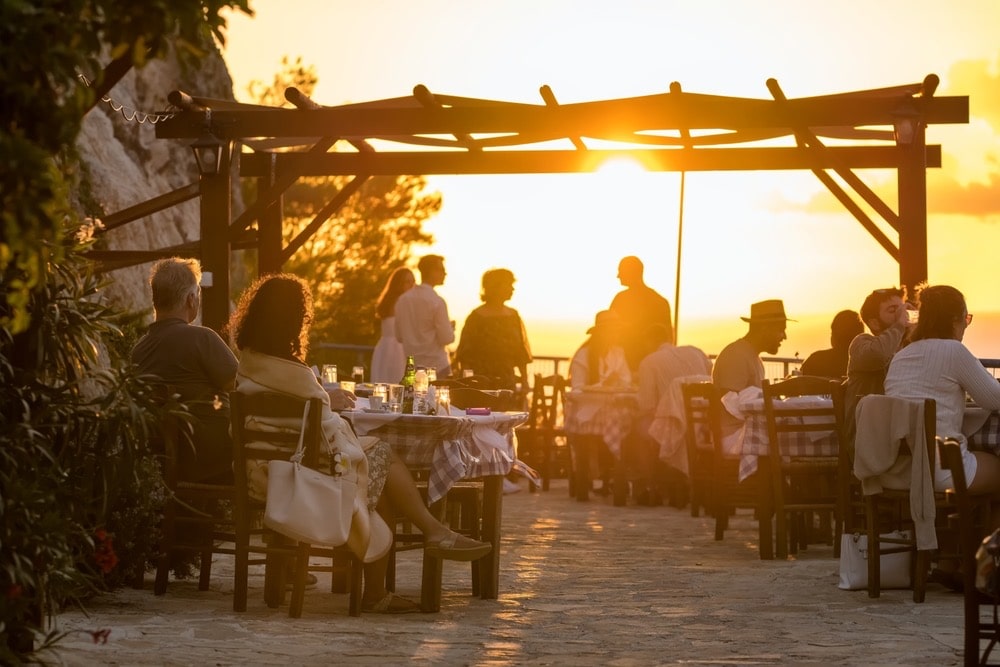
Experiencing the true essence of Greece requires more than just sightseeing; it demands a full immersion into the local lifestyle, starting with the iconic rituals of the evening. In the heart of a Greek summer, the transition from day to night is often marked by a glass of ouzo. This anise-flavored spirit is a cornerstone of social life. While its distinct licorice profile may feel intense elsewhere, in the Mediterranean air, it becomes the perfect accompaniment to the setting sun. The proper way to enjoy it is a slow, deliberate process: adding a splash of water or a few ice cubes transforms the clear liquid into a cloudy, milky white swirl. This simple act is more than just preparation; it is a cultural signal that you are ready to embrace the unhurried pace of Greek life.
The Tradition of Greek Spirits and Hospitality
While ouzo is the most famous export, those looking for a deeper connection to local hospitality may be introduced to its more potent relative, tsipouro. This robust brandy, containing roughly 40 percent alcohol, is akin to Italian grappa and is often reserved for long, boisterous evenings filled with storytelling and toasts. Whether you are sipping ouzo as an aperitif or sharing tsipouro with newfound friends, these spirits serve as the social glue that binds a long meal together. Immersing yourself in these traditions allows you to move beyond the role of a standard tourist and become a participant in the local rhythm.
Finding Authenticity in the Local Taverna
The soul of Greek social life resides in the taverna. These establishments are found everywhere, from the car-free alleys of Hydra and the rugged cliffs of the Mani Peninsula to the hidden corners beneath the Acropolis in Athens. At first glance, a taverna might appear modest with its simple wooden tables and mismatched chairs. However, the true value lies in the atmosphere. You will hear the rhythmic click of worry beads, the clatter of backgammon dice, and the steady hum of conversation. Stray cats often linger nearby, and the scent of hand-rolled cigarettes drifts through the air, creating a scene that has remained unchanged for generations.
The Foundations of Greek Gastronomy
Greek cuisine is celebrated for its simplicity and reliance on high-quality, seasonal ingredients. Most traditional dishes are built upon four fundamental pillars: briny olives and golden olive oil, tangy feta cheese, sun-ripened tomatoes, and crisp, buttery phyllo pastry. Rather than focusing on complex techniques, Greek chefs rely on the natural flavors of these staples. A typical meal often begins with mezedes—small, shareable plates such as creamy tzatziki, fava bean puree, garlic dip, and roasted peppers stuffed with feta. These appetizers are meant to be enjoyed slowly, allowing the table to debate the merits of the catch of the day.
Seafood plays a vital role in the coastal diet. It is common to see fresh octopus or calamari hanging outside a kitchen, ready for the grill. In local markets, you will find a variety of small fish categorized by size—from three-inch sardines to tiny, one-inch “whitebait” fried to a crisp. Whether you are navigating the bones of a larger fish or enjoying the crunchy texture of the smaller varieties, the emphasis is always on freshness and local sourcing.
Navigating the Local Dining Culture
To eat like a local, timing is everything. Most Greeks do not head out for dinner until at least 9 p.m. Arriving earlier often means dining in a room filled only with other travelers. In major cities, tavernas stay vibrant well past midnight, though in smaller villages, the schedule can be much more informal. It is not uncommon for a family-run spot to close early on a quiet night, regardless of the hours posted on the door. For an even more authentic look at the food culture, a visit to the Central Market in Athens provides a sensory journey through stalls of fresh meat, barrels of feta, and endless varieties of olives. Tucked away in these markets are small gems like the Karayiannis Ouzo Bar, where you can grab a quick drink and a snack in the middle of the daily bustle.
Faith, Music, and the Joy of Celebration
The Greek identity is also deeply tied to the Orthodox Church and traditional music. With the vast majority of the population identifying as Orthodox, religious elements are visible everywhere—from roadside icon shrines to the presence of village priests in their traditional black robes. Major holidays like Easter are celebrated with immense fervor and communal feasts, where entire families gather to roast lambs on spits, turning the occasion into a town-wide celebration.
Music and dance are the final ingredients of the Greek experience. On summer evenings, the sounds of the bouzouki—a traditional long-necked mandolin—often fill the air. Folk dances like the circular kalamatianos or the shoulder-to-shoulder syrtaki bring people together, regardless of age. While these dances are staples at weddings and baptisms, the energy of a lively taverna can trigger a spontaneous celebration at any time. It is an environment where the music, the spirits, and the company culminate in a joyful “Opa!”—marking a moment of pure, unadulterated connection to the Greek way of life.
Final Thoughts on Embracing the Greek Lifestyle
Surrendering to the pace of Greece means more than just following a map; it means letting go of rigid schedules and embracing the spontaneity of the moment. By dining late, sharing mezedes, and engaging with the local traditions of music and drink, you discover the true warmth of the Greek people. Whether you are enjoying a quiet ouzo by the sea or dancing in a crowded taverna, the easygoing lifestyle of this Mediterranean paradise is easy to adopt and impossible to forget.