













Situated merely an hour away from popular English destinations like Bath and the Cotswolds, the lively city of Cardiff provides an authentic taste of Welsh culture that guarantees lasting memories.
Many travelers mapping out a British itinerary overlook the ease of catching a train from London to find themselves in the revitalized Welsh capital in just over two hours. From this central hub, visitors can readily embark on a day trip to an expansive open-air folk museum or journey into the verdant Wye Valley to explore the striking ruins of Tintern Abbey.
Like numerous powerhouses of the Industrial Age, Cardiff has bounced back with renewed energy following its transition away from its rust-belt era. Its historic fortress features a blend of medieval architecture and Victorian extravagance, the inner city pulses with activity, and the former port—which once handled a massive share of the global coal trade—now serves as a scenic pedestrian destination.
Although it frequently misses standard travel wishlists, the vibrant city of Cardiff accommodates a population of around 380,000 and presents numerous attractions for visitors. Sports enthusiasts recognize it as the location of Principality Stadium, notable for hosting the UK’s initial fully retractable stadium roof, while science-fiction followers associate it with the production sites of the television series Doctor Who. Primarily, however, residents view Cardiff as their political and cultural heart. To fully absorb the local ambiance, travelers can wander through the intricate Victorian shopping arcades weaving across the downtown district, explore local cultural institutions, and tour the contemporary waterfront zone.
Among the municipality’s premier landmarks is Cardiff Castle, a diverse complex preserving remnants of defensive structures dating back to the Roman era within its medieval perimeter. The Normans left the most substantial footprint during the 11th century by constructing a defensive keep atop an artificial earthwork, utilizing a classic motte-and-bailey design. Beyond exploring the ramparts and the elevated tower, visitors can inspect a World War II air-raid shelter, a military exhibition, and the lavish Victorian apartments. Redesigned by John Crichton-Stuart—whose wealth from the coal industry made him among the richest men in Europe during the late 1860s—these quarters offer an imaginative interpretation of the Middle Ages, serving as a Welsh counterpart to the fairy-tale palaces constructed in Bavaria during the same period.
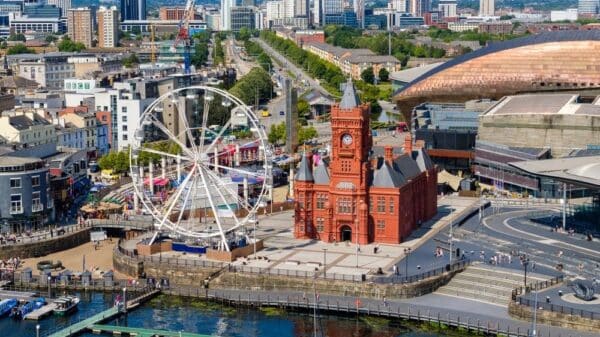
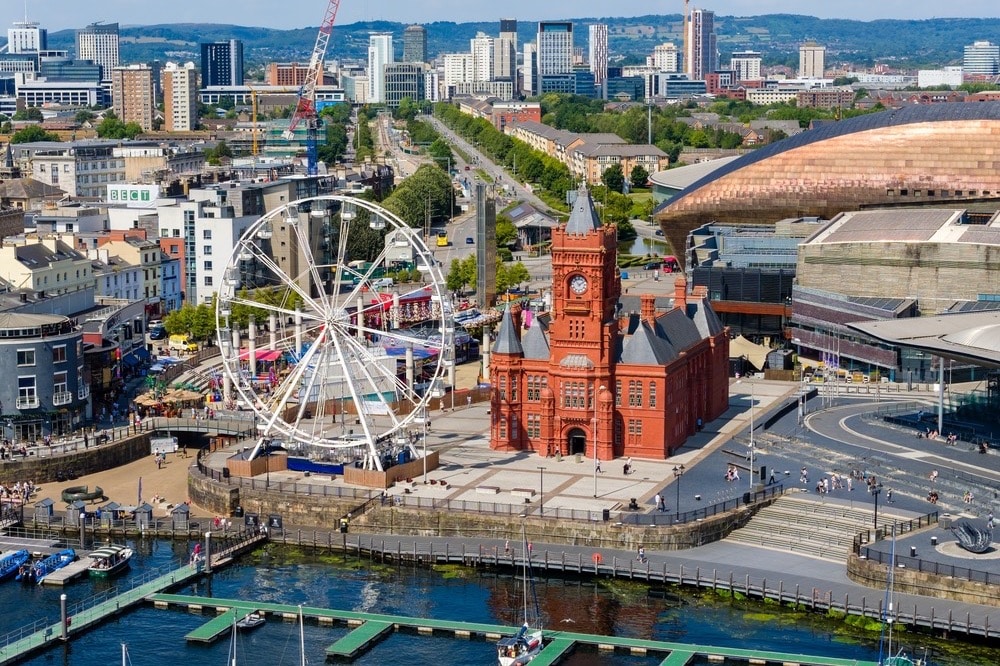
Following a deep dive into local heritage, travelers can head south to the redeveloped Docklands district on Cardiff Bay to experience the city’s most dynamic modern quarter. A popular way to reach this area from the downtown core is via a leisurely boat excursion down the River Taff.
Previously recognized globally as the capital of the coal industry, Cardiff earned the moniker “Coal-opolis” during the steam-driven Industrial Revolution, an era when Welsh coal was deemed the finest on earth. However, by the mid-1960s, the final coal cargo departed from the port, triggering an economic downturn typical of many industrial towns across Britain.
The Docklands have since undergone extensive renewal, introducing contemporary architectural achievements such as the Wales Millennium Centre performing arts venue alongside preserved historic structures and the Senedd, a striking modern facility hosting the Welsh Parliament.
Furthermore, Cardiff functions as an ideal gateway for exploring wider attractions throughout South Wales. Located just a 30-minute journey away, the St. Fagans National Museum of History delivers a comprehensive look at traditional regional heritage. Spanning 100 acres, this open-air institution features more than 40 meticulously reconstructed and furnished historic structures relocated from across Wales, alongside a Tudor-era manor house. On-site craftspeople actively demonstrate traditional trades, while guides stationed inside historical cottages share insights regarding local history and rural lifestyles.
For travelers drawn to romantic architecture, Tintern Abbey stands as a must-see destination, having inspired renowned poets and painters alike. Established in 1131 within a secluded river valley, the institution operated as a Cistercian monastery until its suppression during the reign of Henry VIII. Few monastic ruins remain as structurally complete or as scenically positioned. Substantial portions of the 250-foot-long church exterior still stand, showcasing intricate window tracery and the distinct outlines of the original chapter house and refectory. The natural light pouring through the roofless structure accentuates the Gothic architectural details.
While Wales is frequently overshadowed by neighboring England and Scotland, and South Wales is often bypassed in favor of northern landscapes, the Cardiff region delivers a rewarding combination of deep historical roots and modern urban renewal.