







While Germany has a well-known reputation for unmatched organization and efficiency, the country is equally adept at the art of unwinding. Travelers who journey through Germany’s scenic Black Forest—complete with its expansive network of walking paths and renowned mineral baths—will quickly discover a slower, more restorative pace of life.
Discovering the Black Forest
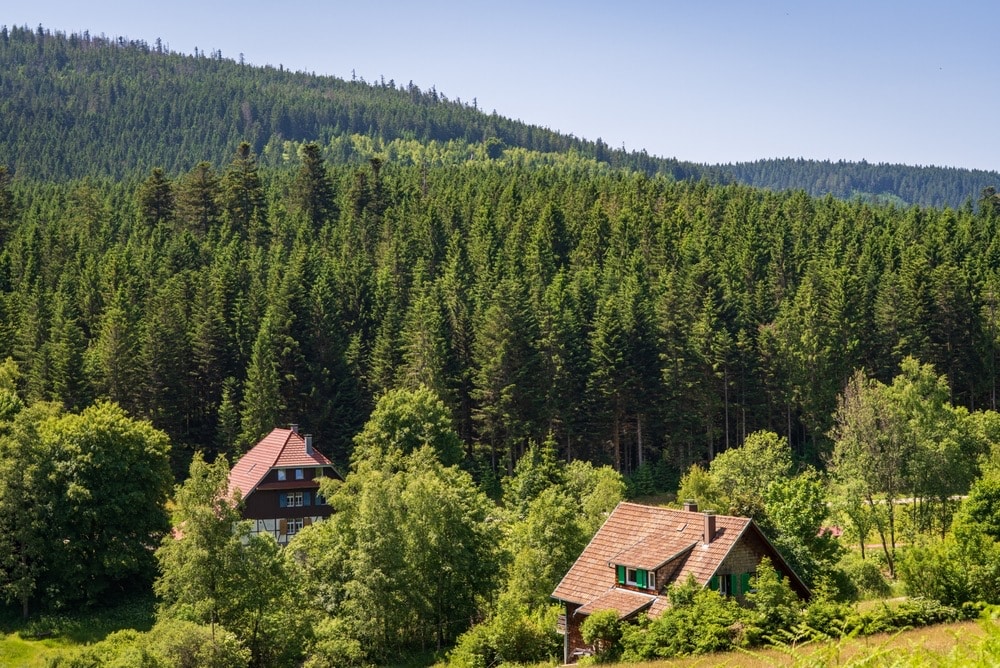
Stretching roughly 100 miles in a hilly terrain along the southwestern border with France, the Black Forest is a beloved destination for both domestic vacationers and international travelers. Visitors come seeking pure air, endless hiking adventures, classic cuckoo clocks, and rich, schnapps-infused Black Forest cherry cake alongside peaceful relaxation.
Local heritage remains deeply embedded in the region, a history vividly showcased at the Black Forest Open-Air Museum, officially known as the Vogtsbauernhof, situated in Gutach. Centered around a historic farmhouse, this destination brings traditional rural life to life by utilizing preserved antique farmsteads to display artifacts from bygone eras. Walking through the exhibits reveals why local farmers, faced with plenty of downtime during the harsh winter months, naturally turned to the intricate craft of clockmaking.
Horological Heritage and Urban Charm
Given this rich clockmaking legacy, it comes as no surprise that the area hosts an exceptional horological institution. The German Clock Museum located in Furtwangen offers far more than a simple display of chiming cuckoo clocks, tracing the evolution of timekeeping from the Dark Ages forward.
The principal urban hub of this rural territory is Freiburg, an unpretentious university city featuring a striking sandstone cathedral and an old town center that successfully retains its medieval atmosphere despite sustaining significant damage during the Second World War.
A major element of Freiburg’s distinct character stems from its Bächle, a network of narrow water channels flowing alongside nearly every street since the 13th century. Originally engineered as a rapid-response system to contain fires by allowing streets to be quickly flooded, these minor canals were made possible by building the city’s roadways on a gentle downward slope.
Today, these historic waterways serve a purely aesthetic purpose, imparting a castle-like ambiance to the pedestrianized cobblestone zones connected by charming footbridges. On warm days, children enjoy splashing in the clear water and floating toy boats, while municipal workers regularly maintain the cleanliness of the stone-lined gutters. This canal system is particularly prominent in Freiburg’s former industrial quarter—once a bustling district of tanneries and mills that has since transformed into a lively neighborhood filled with welcoming cafés and boutiques. As local folklore humorously warns, anyone who accidentally steps into a Bächle is destined to marry a local resident.
The Legacy of Baden-Baden
Undoubtedly the most famous destination within the Black Forest is the renowned spa town of Baden-Baden. Over a century and a half ago, this destination served as a premier retreat for Europe’s wealthiest travelers, drawing royalty and aristocracy eager to participate in the traditional Kur—a therapeutic soak in the mineral-rich waters—while patronizing its legendary casino. Today, this scenic community of 55,000 residents welcomes a broader demographic of visitors.
Outside of gaming hours, the grand casino building opens its doors for morning guided tours. Celebrated figures like Marlene Dietrich once praised the 1850s establishment, modeled after the Palace of Versailles, as exceptionally magnificent. Its chandelier-lit halls feature decor honoring French royalty, a nod to the 19th-century era when gambling remained illegal in France, making Baden-Baden an accessible and popular destination just across the border.
In German-speaking regions, place names prefixed with Bad signify a history centered around mineral springs. While towns like Bad Ischl, Bad Ausse, and Bad Kissingen dot the broader landscape, Baden-Baden stands out by offering two distinct aquatic experiences: the traditional, stately Friedrichsbad (frequently called the Roman-Irish Bath) and the contemporary Caracalla Spa.
Exploring the Black Forest Highlands
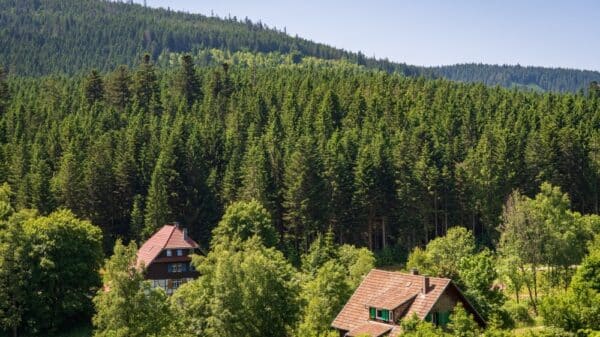
Toward the southern boundary of the territory, the landscape transitions into the Black Forest Highlands, characterized by a gentler topography than the dense northern woodlands. Featuring onion-domed church steeples, tranquil lakes, and quiet meadow trails, this countryside offers classic pastoral beauty where traditional farmhouses historically sheltered families on the ground floor and livestock above. Today, these enduring structures often combine historic charm with modern innovations like rooftop solar panels.
One of the finest ways to experience the natural environment firsthand is by embarking on a five-mile walk connecting the picturesque villages of St. Märgen and St. Peter. Following this scenic route through open meadows and peaceful forests—complete with strategically placed picnic spots—delivers an authentic and memorable taste of the Black Forest.
Ultimately, whether you choose to explore centuries-old folklore museums, wander through the historic canals of Freiburg, indulge in mineral-rich thermal baths, or hike across tranquil southern highlands, the Black Forest offers a uniquely balanced travel experience that seamlessly pairs active outdoor exploration with deep, restorative relaxation.